How Myeloma Impacts the Anion Gap
What Is the Anion Gap?
The anion gap is a derived test result employed to analyze serum electrolytes and assess acid-base balance. It contrasts the main measured positively charged particles and anions in the blood, mainly sodium, chloride, and bicarbonate. Since the body contains various charged substances that are not directly measured on a standard electrolyte panel, the anion gap acts as a valuable diagnostic clue in blood chemistry.
At its most basic, the anion gap reflects the difference between the measured cations and anions. A typical formula uses sodium minus chloride and bicarbonate. This helps clinicians detect hidden acid buildup, electrolyte imbalance, or unusual protein patterns. A normal result does not always mean everything is fine, but an abnormal result can point toward an underlying problem that needs more context.
The term is especially useful because the body’s charge balance is tightly regulated. Sodium carries a positive charge, while chloride and bicarbonate carry negative charge. The gap represents unmeasured anions and cations such as proteins, phosphate, lactate, and other substances. That is why changes in protein concentration can affect the result even when the main electrolytes look stable.
In practice, the anion gap is part of routine laboratory interpretation. It is often used to evaluate possible causes of metabolic acidosis, but it can also reveal unexpected findings in conditions involving abnormal proteins or renal dysfunction. That is where multiple myeloma becomes relevant.
In What Way myeloma Can Reduce the Anion Gap
myeloma is a plasma cell disorder in which abnormal plasma cells produce large amounts of a single type of antibody or antibody fragment. These abnormal proteins are called monoclonal proteins, also known as M proteins. When enough of these proteins circulate in the blood, they can alter the apparent charge balance and lead to a reduced anion gap.
The mechanism is related to the charge of proteins. Some monoclonal proteins, especially certain immunoglobulins, carry a net positive ion-like charge. These positive proteins can behave like unmeasured cations in the blood. As their concentration rises, the measured electrolytes may appear relatively shifted, and the calculated anion gap can fall.
This does not happen in every case of multiple myeloma, but it is a recognized laboratory pattern. The clue is most likely to appear when paraproteins are abundant. In that setting, a low anion gap may be one of the first abnormal results that prompts deeper evaluation.
myeloma is not the only condition linked to paraproteinemia, but it is one of the most important. Monoclonal gammopathy is a broader term that refers to the presence of a single abnormal immunoglobulin in the blood. Paraproteinemia can be seen in multiple myeloma, monoclonal gammopathy of undetermined significance, and related disorders. Because of this, a low anion gap should be viewed as a potential clue rather than a diagnosis by itself.
Among the immunoglobulin patterns, IgG myeloma is classically associated with a low anion gap more often than other types. That is because many IgG paraproteins are positively charged at physiologic pH. the IgA form of myeloma can also affect the anion gap, although the pattern may be less consistent. The key point is that abnormal immunoglobulins can change the expected charge distribution and distort the lab value.
Why a Reduced Anion Gap Happens in Plasma Cell Disorders
A decreased anion gap in a plasma cell disorder is often a result of more than one factor. One of the main contributors is albumin. Albumin is a major negatively charged protein in the blood and a significant component of the normal anion gap. When albumin is reduced, the measured gap may decrease even if no major acid-base problem exists.
This matters because hypoalbuminemia can mask or distort other abnormalities. In people with plasma cell dyscrasia, low albumin may result from chronic illness, inflammation, reduced intake, kidney involvement, or protein loss. Since albumin contributes greatly to the normal gap, a decrease in albumin can make the anion gap look misleadingly low.
Abnormal https://anion-gap-widget042.quantlynix.com/posts/anion-gap-calculator-for-assessing-acid-base-disturbances immunoglobulins add another layer. Some paraproteins are positively charged, and those cationic immunoglobulins can counterbalance the negative charge normally contributed by albumin and other unmeasured anions. As a result, the lab value may suggest a below-expected gap even when the patient’s acid-base status is otherwise stable.
Because of these overlapping effects, the result should be interpreted in context. A low anion gap does not automatically mean a dangerous acid buildup is absent, and it does not prove multiple myeloma. Instead, it is a clinical significance signal that should be matched with symptoms, other labs, and the overall picture.
Kidney involvement can also affect the interpretation. Kidney disease may coexist with multiple myeloma, and renal impairment can affect protein handling, electrolyte balance, and the interpretation of serum electrolytes. In some cases, kidney disease and paraproteinemia together can make the blood chemistry more difficult to interpret without additional testing.
How to Interpret Anion Gap Results with an Anion Gap Calculator
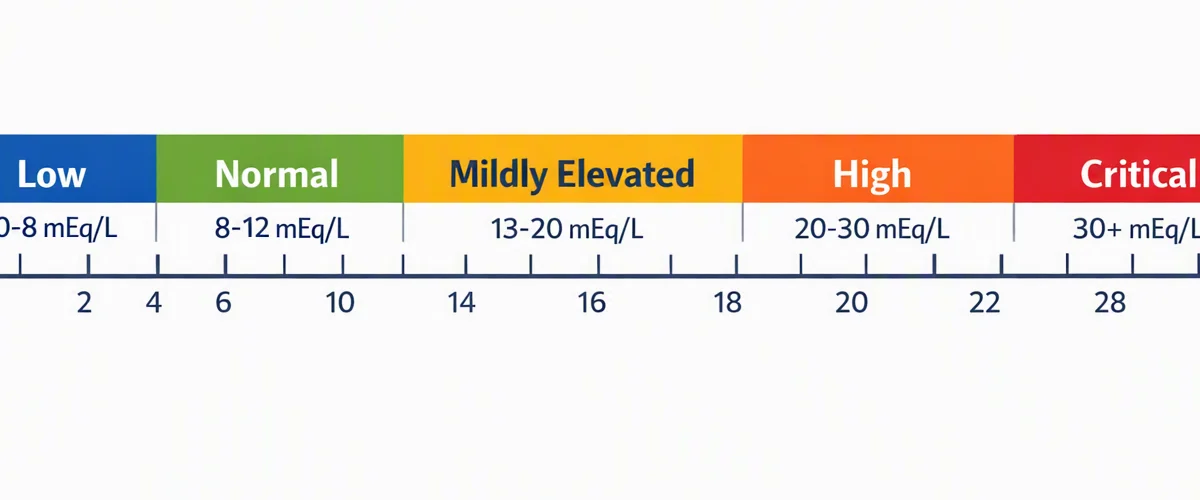
An anion gap calculator is a practical tool for quickly computing the gap from a basic electrolyte panel. It typically uses lab-measured electrolytes such as sodium, chloride, and bicarbonate. This helps make it easier to detect unusual results and judge whether the gap is low, normal, or high.
Using an anion gap calculator is helpful because it provides rapid laboratory interpretation. It minimizes manual calculation errors and allows you to compare the result with the expected range. When the result is abnormal, the next step is to ask whether the abnormality reflects a real physiologic issue or whether it is influenced by factors such as hypoalbuminemia or paraproteins.
For example, if the serum bicarbonate is low and the anion gap is high, that pattern can suggest metabolic acidosis. If the anion gap is low, the calculator can still help, but the result should be reviewed carefully for causes such as low albumin, monoclonal proteins, or lab-related artifact.
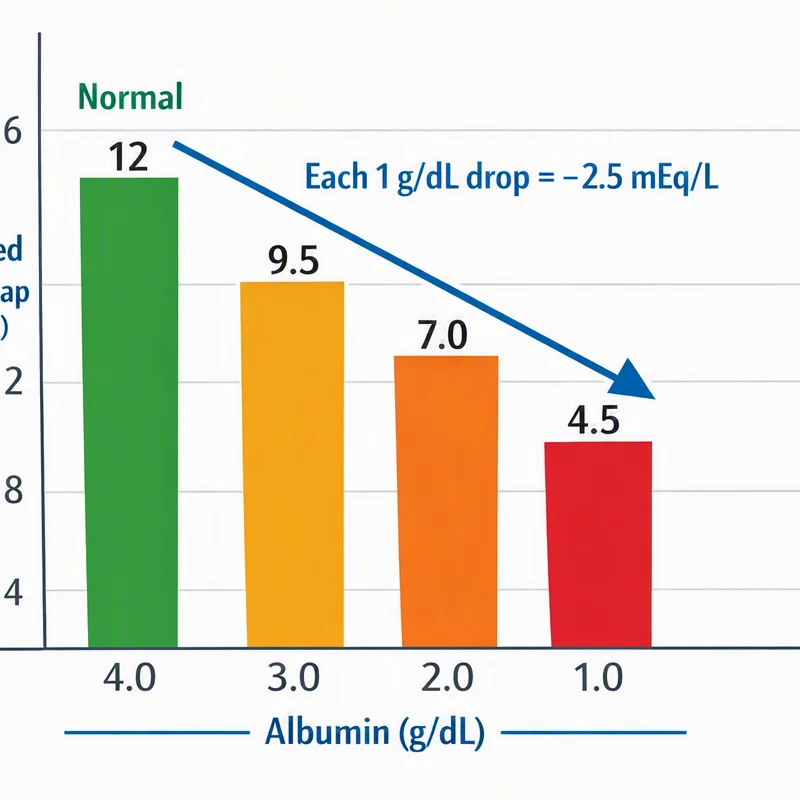
A useful way to think about this is in terms of a corrected anion gap. When albumin is low, many clinicians adjust the result because the uncorrected value can miss the true gap. This correction is especially relevant in patients with protein abnormalities, including those with multiple myeloma. The anion gap calculator provides the baseline; the correction supplies the clinical context.
Practical point: A low anion gap should not be read in isolation. Always review the full electrolyte panel, the albumin level, and whether monoclonal proteins could be affecting the result.
The calculator also helps show whether the abnormality is repeated or isolated. A single low lab value may be due to measurement issues, while repeated abnormal results may suggest a real underlying pattern. That is why the tool is useful not only for arithmetic, but also for pattern recognition and screening test support.
Other Reasons of a Decreased or Increased Anion Gap
Multiple myeloma is an significant reason of a low anion gap, but it is not the only one. One common reason for an unanticipated result is laboratory error. A sample issue, instrument calibration problem, or collection error can alter sodium, chloride, or bicarbonate values and create an abnormal calculated gap. When the result does not match the clinical picture, repeat testing is often warranted.
Some substances and toxins can also affect the result. Lithium, for example, can increase unmeasured cations and lower the anion gap. In other situations, too much chloride measurement or true increases in chloride can create hyperchloremia, which may lower the gap. These patterns are separate from paraproteinemia but can seem comparable on the surface.
A increased anion gap is usually discussed in relation to metabolic acidosis. That condition can occur when acids collect, such as in diabetic ketoacidosis, lactic acidosis, or kidney failure. In contrast, a reduced anion gap is less common and often more likely to be forgotten. Both extremes of the spectrum merit attention because they can point to important underlying disease.
Other contributors include changes in measured electrolytes, unmeasured cations, and protein concentration. For that reason, abnormal results should always be viewed as a cue to look into, not as a diagnosis on their own. In the setting of plasma cell disease, the challenge is distinguishing a genuine biologic effect from a misleading or secondary lab pattern.
When a Low Anion Gap Should Prompt Further Testing
A decreased anion gap calls for additional review when it is repeated, unexplained, or associated with other unusual results. If the pattern appears alongside anemia, renal impairment, bone pain, fatigue, or abnormal protein studies, it might suggest a plasma cell disorder. In that case, additional testing is often appropriate.
One of the most important follow-up tests is serum protein electrophoresis. This test identifies a monoclonal spike or other abnormal protein pattern. It helps identify monoclonal gammopathy, paraproteinemia, or a more specific plasma cell disorder. If the electrophoresis pattern is suspicious, immunofixation can further define the exact type of immunoglobulin involved.
Because multiple myeloma often affects multiple body systems, clinicians also review kidney function and a complete blood count. Kidney dysfunction may suggest renal involvement from the disease or from another cause. A complete blood count can reveal anemia or other changes that reinforce the case for deeper evaluation. Together, these tests help build a broader picture than the anion gap alone.
If the low value is seen in a patient with known monoclonal gammopathy or suspected paraproteinemia, the abnormal result should not be dismissed. Instead, it can serve as a helpful clue that supports broader laboratory interpretation. The goal is not to diagnose multiple myeloma from one number, but to detect when the blood chemistry is signaling something important.
Frequently Asked Questions Regarding Multiple Myeloma and Anion Gap
Can multiple myeloma cause a low anion gap?
Yes, it can. Multiple myeloma can lead to a low anion gap because atypical monoclonal proteins may act as positively charged molecules in the blood. This effect can lower the calculated gap, especially when paraproteins are abundant. However, a low anion gap is not specific to multiple myeloma and must be interpreted with the rest of the lab results and symptoms.
For what reason does IgG myeloma lower the anion gap more often?
IgG myeloma lowers the anion gap more often because many IgG paraproteins have a net positive charge at physiologic pH. These cationic immunoglobulins can act like unmeasured cations and reduce the calculated gap. This is one reason IgG-related paraproteinemia is a classic cause of an unexpectedly low anion gap.
Will a normal anion gap exclude multiple myeloma?
Not necessarily. A normal anion gap does not rule out multiple myeloma. Many people with the disease will not have a low gap, and the lab value can be influenced by albumin, kidney disease, and other factors. Multiple myeloma is diagnosed through a combination of lab results, imaging, symptoms, and medical evaluation, not from the anion gap alone.
Must it be albumin be corrected when calculating the anion gap?
Definitely, albumin should be considered because hypoalbuminemia can lower the anion gap and make the result misleading. A corrected anion gap is often more informative when albumin is low. This is especially important in patients with plasma cell disorders, where low albumin and paraproteins may both affect the number.
Under what circumstances should a low anion gap be investigated further?
A low anion gap should be investigated further when it is persistent, unexplained, or paired with other abnormal findings such as anemia, kidney dysfunction, or abnormal protein levels. It is also worth evaluating if there is suspicion for monoclonal gammopathy, paraproteinemia, or multiple myeloma. In those situations, serum protein electrophoresis, immunofixation, and a broader medical evaluation are often appropriate.